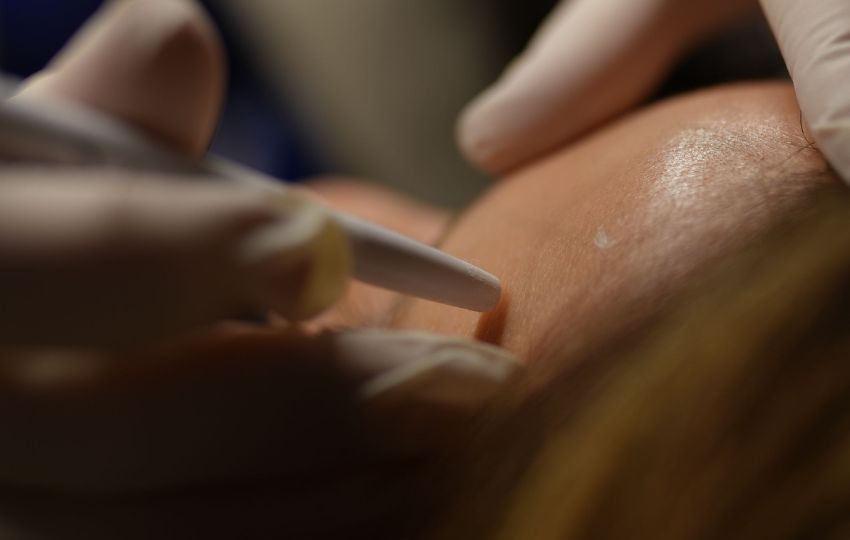
Microneedling combined with exosome therapy has become one of the most talked-about combinations in regenerative aesthetics. A 2026 systematic review now offers the clearest picture yet of what the evidence actually supports.
The Review
The systematic review, conducted by Dhaliwal and colleagues following PRISMA-SWiM guidelines, screened 256 unique references through June 2025 . After quality appraisal using the Joanna Briggs Institute tool with a 70% inclusion threshold, eight studies comprising 171 patients were analyzed , spanning South Korea, the United States, Italy, Greece, and China . Conditions covered included androgenetic alopecia, skin aging, melasma, hyperpigmentation, enlarged pores, active acne, and atrophic scarring .
Hair: Measurable Density Gains
The hair loss data was notably specific. One included study assessed combined microneedling and exosome treatment for androgenetic alopecia, measuring hair density at baseline, 12 weeks, and 24 weeks . In this 24-week, open-label, prospective study using a freeze-dried exosome solution, mean hair density increased from 158.03/cm² at baseline to 166.14/cm² at week 24 — a mean increase of 8.11/cm² over the study period . Global photographic assessment showed statistically significant improvement at both 12 and 24 weeks, with over half of patients showing visible improvement by study’s end .
Scars and Skin Quality
For atrophic scarring and aging skin, the combination consistently outperformed microneedling alone. Split-face photoaging trials demonstrated superior improvements in wrinkle roughness, elasticity, hydration, and pigmentation when exosomes were added, supported by histology showing increased collagen density and remodeling markers . A related 2025 review reinforced this picture, finding consistent short-term improvements in hydration, elasticity, wrinkle appearance, pore size, and pigmentation across 19 human studies of exosome-based skin therapies.
Safety Profile — With a Caution
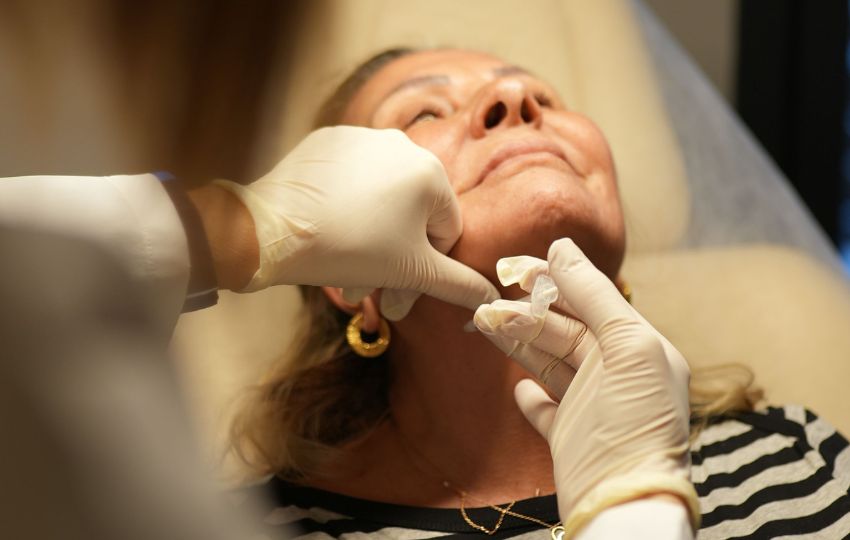
Encouragingly, the broader 2025 review found no serious adverse events linked to topical exosome treatment, with most patients experiencing only mild, short-lived redness and swelling . However, product sourcing matters considerably. One case study found that unregulated intradermal injections of poorly characterized exosome products led to long-lasting lumps and scarring , underlining the risks when product quality and medical oversight are inadequate.
The Caveat: Early-Stage Evidence
Despite promising results, the evidence base remains immature. Most included studies were split-face trials or case series rather than larger randomized controlled trials , and inconsistency in exosome isolation procedures, characterization criteria, and outcome reporting still limits cross-study comparison .
Conclusion
Microneedling combined with exosomes shows genuine, measurable promise for both hair density and scar/skin quality outcomes, but the field remains in an early, evolving stage. Patient outcomes are likely to depend heavily on exosome source and quality, alongside the need for more robust, larger-scale randomized trials to confirm long-term durability.
References:
1. Dhaliwal et al., J Cosmet Dermatol, 2026, DOI: 10.1111/jocd.70881
2. Cosmetics journal, 2025 systematic review (19 human studies)
3. Cureus, 2026, “Efficacy of Exosome-Based Therapies for Skin Rejuvenation”